-Those Fantastic Flying Machines-


NEWS AND ANNOUNCEMENTS

Man must rise above the Earth—to the top of the atmosphere and beyond—for only thus will he fully understand the world in which he lives.— Socrates


Google
 

Search This Blog

Friday, March 29, 2013

Solar-Powered Airplane Ready for Coast-to-Coast U.S. Flight


Solar-Powered Airplane Ready for Coast-to-Coast U.S. Flight

Woodrow Bellamy III


Swiss pilots Bertrand Piccard and Andre Borschberg, founders of the Solar Impulse project, on Thursday announced a schedule for their coast-to-coast U.S. flight with their aircraft powered exclusively by solar energy.


Piccard and Borschberg first debuted the Solar Impulse aircraft with a successful 26-hour solar powered flight over Switzerland in2010. Now the team is ready for a flight from California to New York City with stops Arizona, Texas and Washington D.C. beginning in early May. The aircraft is scheduled to reach its final destination at New York’s JFK airport in early July.

The Solar Impulse team has said that it can’t foresee commercial flights powered by solar energy in the near future, but that its goal is to promote clean technologies.

The aircraft has a wingspan of 208 ft and is powered by the 12,000 solar cells that rest below the solar panels on the upper part of the wings. The cells capture the energy of the sun and transform it into electricity, simultaneously powering the aircraft's four engines and lithium ion batteries. While the airplane is in flight, it is powered by the energy of the sun, storing excess energy in the batteries, which can than be used at night or whenever sunlight is unavailable.

“A flying laboratory for clean technologies, this prototype is the result of seven years of intense work in the fields of materials science, energy management and man-machine interface. Many of these technologies can also be applied to sectors beyond aviation,” said Borschberg.

Following the cross-country flight this year, the Solar Impulse team plans to attempt to circumnavigate the globe with its aircraft in 2015 using no jet fuel. More

Follow @AvionicsMag

Monday, February 25, 2013

Hard day to land an Antonov 124 (new video !)

Russian Air force Su 35 [HD]

Wednesday, February 20, 2013

Winglets fitted to first flying A350

Winglets fitted to first flying A350


By: DAVID KAMINSKI-MORROW LONDON
03:01 19 Feb 2013
Source:


Airbus has started fitting the sweeping winglets to the first flying prototype of its A350 twinjet, ahead of its maiden flight later this year.

The winglets will give this variant of the A350 a total span of 64.8m (212ft).

Airbus's latest aircraft specification document for the A350-900, released in December 2012, indicates that the winglet sweeps 5.2m from its leading-edge attachment to its rear tip.


Airbus is aiming to fly MSN1 in mid-2013. Both of the aircraft's Rolls-Royce Trent XWB engines have been delivered to the assembly line in Toulouse for podding and installation.

Wednesday, February 06, 2013

Boeing probe uncovers battery flaw


Boeing probe uncovers battery flaw
Finding was similar to incident in Boston

Feb. 5, 2013 8:46 PM,


This photo shows the distorted main lithium-ion battery, left, and an undamaged auxiliary battery of the All Nippon Airways' Boeing 787 that made an emergency landing Jan.16. / Japan Transport Safety Board/AP file

Battery maker GS Yuasa said Tuesday that its April-December net profit fell 3.6 percent to $59.6 million from a year earlier, as demand for batteries lagged due to sluggish demand in Japan and overseas. 

The company has struggled to turn its lithium ion business to profitability. In April-December its lithium ion business posted a $78.2 million loss.

TOKYO — An investigation into a lithium ion battery that overheated on a Boeing 787 flight in Japan last month found evidence of the same type of “thermal runaway” seen in a similar incident in Boston, officials said Tuesday.

The Japan Transportation Safety Board said that CAT scans and other analysis found damage to all eight cells in the battery that overheated on the All Nippon Airways 787 on Jan. 16, which prompted an emergency landing and probes by U.S. and Japanese aviation safety regulators.

They also found signs of short-circuiting and “thermal runaway,” a chemical reaction in which rising temperature causes progressively hotter temperatures. U.S. investigators found similar evidence in the battery that caught fire last month on a Japan Airlines 787 parked in Boston.

Photos distributed by Japanese investigators show charring of six of the eight cells in the ANA 787’s battery and a frayed and broken earthing wire — meant to minimize the risk of electric shock.

All 50 Boeing 787 Dreamliners in operation are grounded as regulators and Boeing investigate the issue. The Japanese probe is focusing on flight data records and on the charger and other electrical systems connected to the damaged battery.

Tuesday, February 05, 2013

Aviation Today
Boeing Looks to Resume 787 Test Flights
Boeing is requesting FAA approval to resume test flights with its grounded 787 Dreamliner. 
> Full Story


Monday, February 04, 2013

Boeing 787 investigation making progress -US NTSB


Boeing 787 investigation making progress -US NTSB

Sat Feb 2, 2013 12:04am GMT

* Energy Department investigator joins probe

* Boeing welcomes progress in NTSB investigation

By Andrea Shalal-Esa

WASHINGTON, Feb 1 (Reuters) - U.S. officials on Friday said they are making progress in their investigation of a battery fire on a Boeing Co 787 Dreamliner in Boston this month, as the grounding of Boeing's entire fleet Of 787s stretched into a third week.

All 50 Boeing 787s remain grounded as authorities in the United States, Japan and France investigate the Boston battery fire on Jan. 7 and a separate battery failure that forced a second 787 to make an emergency landing in Japan a week later.

The U.S. safety board said it continued to look at flight data recorded aboard the 787 aircraft involved in the Jan. 7 event at Boston airport for any information about the performance of the lithium-ion battery that caught fire, and its charging system, which was built by Securaplane, a unit of Britain's Meggitt Plc.

"Our investigators are moving swiftly and we are making progress," Kelly Nantel, a spokeswoman for the U.S. National Transportation Safety Board, said after the U.S. safety board issued a seventh update on the investigation. She did not elaborate.

Boeing welcomed the news and said it continued to work closely with authorities in the United States and Japan.

The NTSB said an expert from the Department of Energy had joined the investigation, and an NTSB investigator would travel to France on Sunday or Monday with a "battery contactor", which connects the battery to the planes' electrical systems, for further tests at the equipment's manufacturer, Thales SA .

The NTSB experts at the U.S. Naval Surface Warfare Center laboratories were continuing to look at a second, undamaged lithium-ion battery pulled from the same Japan Airlines plane. Both batteries were built by GS Yuasa, a Japanese company.

Initial tests, including infrared thermal imaging of each cell in the undamaged battery, found no anomalies, according to the NTSB update. It said the battery's eight cells were undergoing another scan to examine their internal condition.

U.S., Japanese and French safety inspectors - aided by industry officials - have been trying to determine what caused the battery fire on the 787 in Boston and a separate battery failure in Japan that involved smoke the following week.

The failure of investigators to identify the root cause of the incidents has sparked concerns that the 787 grounding will last longer, and hit Boeing and the airlines that operate the 787 harder than expected.

But Boeing's chief executive, Jim McNerney, told investors this week that the company planned to speed up production of the jet as planned, and had not seen any reason to question its use of lithium ion batteries on the 787.

Boeing's shares closed 1.35 percent higher at $74.87 on the New York Stock Exchange on Tuesday.

Neither the NTSB, nor the U.S. Federal Aviation Administration, which is looking at a broader range of problems with the 787, have set timetables for completing their work.

Investigations are also continuing in Seattle, where Boeing builds the planes, and in Japan.

Thursday, January 24, 2013

Sunday, January 20, 2013

The Spiroid Winglet


The Spiroid Winglet


In the late 1990s Aviation Partners Inc. (API), the developer of the blended winglet, began to flight test on a Gulfstream II a completely different winglet shape than anything that had flown before, the spiroid winglet. Theoriginal patent of the closed-loop shape winglet was originally filed in 1992 by one of API's founders. The basic idea of the spiroid winglet is to take the benefits of the blended winglet to their fullest by essentially bringing the blended winglet to loop back onto the wing. The vortices that stream off the wingtips of aircraft are a major source of drag and in the blended winglet, they have resulted in 5-7% increase in fuel efficiency by attenuating those vortices.


The first version of the spiroid winglets flown in the 1990s on the Gulfstream II were more circular in shape than the current incarnation. Flight testing of the first version resulted in refinements to the design that leads to more of an arch design with the inboard section of the spiroid moved farther aft and outboard to bring it closer to the wingtip vortex. The resultant design is now in flight testing on a Dassault Falcon 50 and the winglets and structural strengthening needed add 500 pounds to the empty weight of the jet. It was this Falcon 50 that made its first public appearance at the recent Oshkosh air show. Constructed of polished aluminum and approximately six feet in height, the new spiroids are not just intended to attenuate the wingtip vortex but to attempt to eliminate them altogether. Should this be the case, the leap in fuel savings and efficiency would be tremendous- on the order of 30% over the existing blended winglet design.


One of the side benefits of the spiroid winglet's possible ability to nearly eliminate the wingtip vortex would be in air traffic flow management at major airports. As it is right now, aircraft spacing is necessary to allow for wake vortex dissipation for the following aircraft. Aircraft with spiroid winglets would allow following aircraft to be spaced closer, in effect easing some of the congestion at major airports and improving flow efficiency.


The Dassault Falcon 50 testbed is to begin its formal flight test program this month to explore flutter, stability, and allow precise measurements of the degree of drag reduction. The aircraft will be initially limited to 250 KIAS and 0.70 Mach but as the tests progress, the flight envelope is anticipated to be expanded and may include icing tests.

Friday, January 18, 2013

Lithium Batteries Leaks Central to Boeing’s 787 Woes


Lithium Batteries Leaks Central to Boeing’s 787 Woes
January 17, 2013 8:03 AM


A Boeing 787 Dreamliner operated by United Airlines takes off at Los Angeles International Airport (LAX) on Jan. 9, 2013 in Los Angeles, Calif. (Credit: David McNew/Getty Images)

WASHINGTON— Lithium batteries that can leak corrosive fluid and start fires have emerged as the chief safety concern involving Boeing’s 787 Dreamliner, a problem that apparently is far more serious than government or company officials acknowledged less than a week ago.

The Federal Aviation Administration late Wednesday grounded Boeing’s newest and most technologically advanced jetliner until the risk of battery fires is resolved. The order applies only to the six Dreamliners operated by United Airlines, the lone U.S. carrier with 787s. But other airlines and civil aviation authorities in other countries will be under pressure to follow suit or face possible accusations of taking unnecessary risks with public safety.

Japan’s two largest air carriers voluntarily grounded their 787s on Wednesday ahead of the FAA’s order following an emergency landing by one of the planes in Japan. On Thursday, the European Aviation Safety Agency ordered all European carriers to ground the jetliner. And the Indian government ordered Air India to ground its fleet of six Boeing 787s.

Only hours before the FAA issued its order, Transportation Secretary Ray LaHood reiterated to reporters that he considers the plane safe and wouldn’t hesitate to fly one. LaHood and FAA Administrator Michael Huerta unequivocally declared the plane safe at a news conference last week even while they ordered a safety review of the aircraft.

However, as details emerged of two battery failures only 10 days apart, it became apparent that the FAA wouldn’t be able to wait for completion of its safety review before taking action. An inspection of the All Nippon Airways 787 that made an emergency landing in western Japan found that electrolytes, a flammable battery fluid, had leaked from the plane’s main lithium-ion battery. Investigators found burn marks around the damage. Japan’s Kyodo News agency quoted transport ministry investigator Hideyo Kosugi as saying the liquid leaked through the electrical room floor to the outside of the aircraft.

In the first battery incident on Jan. 7, it took firefighters 40 minutes to put out a blaze centered in an auxiliary power unit of a Japan Airlines 787. The plane was empty of passengers shortly after landing at Boston’s Logan International Airport.

The two incidents resulted in the release of flammable electrolytes, heat damage and smoke, the FAA confirmed. The release of battery fluid is especially concerning, safety experts said. The fluid is extremely corrosive, which means it can quickly damage electrical wiring and components. The 787 relies far more than any other airliner in operation on electrical systems to function.

The electrolyte fluid also conducts electricity, so as it spreads it can cause short-circuits and ignite fires. And its corrosiveness raises concern about whether a leak might weaken a key support structure of the plane, even though the 787 is the first airliner to be made primarily from lightweight composite materials that are less susceptible to corrosion than aluminum, safety experts said.

“Anytime you have leakage of battery fluid it’s a very serious situation,” said Kevin Hiatt, president and CEO of the Flight Safety Foundation in Alexandria, Va., which promotes global airline safety.

The fluid leak identified in the ANA plane was a “very significant finding,” said John Goglia, an expert on aircraft maintenance and a former National Transportation Safety Board member. It’s possible that a leak could interfere with electrical signals, making it impossible for pilots to control the plane, he said.

“There are all kinds of possibilities,” Goglia said. “They need to go in and take a look at it. I guarantee you everybody’s doing that.”

The 787 is the first airliner to make extensive use of lithium-ion batteries to help power its energy-hungry electrical systems. The batteries charge faster and can be better molded to space-saving shapes compared with other airplane batteries.

“Unfortunately, what Boeing did to save weight is use the same batteries that are in the electric cars, and they are running into the same problems with the 787 as the problems that have shown up in electric cars,” said Paul Czysz, professor emeritus of aeronautical engineering at St. Louis University.

The lithium-ion batteries in several Chevrolet Volts used for crash-testing caught fire in 2011. General Motors engineers eventually figured out that the fires were the result of a battery coolant leak that caused electrical shorts after side-impact crash tests. GM retrofitted the car with more steel to protect the battery. No fires were ever reported on real-world roads.

Jim McNerney, Boeing’s chairman, president and CEO, said the company is working with the FAA to resolve the situation as quickly as possible.

“We are confident the 787 is safe and we stand behind its overall integrity,” he said in a statement. “We will be taking every necessary step in the coming days to assure our customers and the traveling public of the 787′s safety and to return the airplanes to service.”

Mike Sinnett, chief engineer on the 787, said last week that the plane’s batteries have operated through a combined 1.3 million hours and never had an internal fault. He said they were built with multiple protections to ensure that failures “don’t put the airplane at risk.”

The lithium-ion design was chosen because it’s the only type of battery that can take a large charge in a short amount of time.

Neither GS Yuasa Corp., the Japanese company that supplies the batteries for the 787, nor Thales, which makes the battery charging system, would comment on the recent troubles.

Boeing and its customers will need to move quickly to resolve the problem. The aircraft maker has booked orders for more than 800 of the planes from airlines around the world attracted by its increased fuel efficiency.

The jet’s lightweight design makes it more of a fuel-sipper; fuel is the largest expense for most airlines. It’s so lightweight in part because it uses electricity to do things that other airplanes do with hot air vented through internal ducts. So a 787 with electrical problems is like a minivan that won’t haul kids. It goes to the heart of what the thing was built to do.

The FAA order had airlines, flight crews and passengers scrambling to figure out what to do next. Stanislaw Radzio, the captain of a LOT Polish Airlines 787 that landed at O’Hare International Airport in Chicago late Wednesday, told The Associated Press he wasn’t sure when the plane would be heading back to Poland.

“We’re grounded like everyone else,” he said. “We are very unhappy with the situation.”

He said he was told of the FAA decision during the flight from Warsaw. A captain and flight instructor at the Polish airline since 1999, Radzio said the 787 is the nicest plane he’s ever flown.

A passenger on the flight, Taras Dukyn, a student at the University of Illinois at Chicago, said he was surprised when told of the grounding by reporters, but would be willing to fly the aircraft again if the problems were fixed.

“It’s a really nice plane. Computers in every chair. It was comfortable, although I was a little hot,” he said.

FAA Proposal: Pilots Can’t Use Phones, Laptops, iPads In Cockpit At Any Time


FAA Proposal: Pilots Can’t Use Phones, Laptops, iPads In Cockpit At Any Time
January 16, 2013 3:52 PM


WASHINGTON (CBSDC) –- The Federal Aviation Administration is pushing for pilots to heed the advice given to passengers every flight: Turn off all wireless devices.

The FAA is prepared to propose an initiative that would prohibit pilots from using personal wireless devices in the cockpit for the entire flight, aiming to cut down on any distractions. The proposed prohibition comes nearly a year after Congress called for it to be implemented as FAA law.

The FAA’s latest push against personal devices in the cockpit comes after several incidents in the past few years happened as a result of pilots using personal devices, such as laptops, in the cockpit during flights. One incident in particular was the crash of Colgan Air Flight 3407. In that February 2009 tragedy, the co-pilot sent a text message about five minutes before the plane was cleared for takeoff. Shortly thereafter, the plane crashed, resulting in 50 deaths.

But the new law would not eliminate the use of personal devices when it comes to work purposes.

“The proposed rule does not prohibit the use of personal wireless communications devices or laptop computers if the purpose is directly related to operation of the aircraft,” according to the proposal.

Since 2006, the FAA has said that cellphones in the cockpit needed to be turned off once the plane has left the gate, according to USA Today.

The FAA is expected to collect comments about the proposal during a 60-day period.

Thursday, January 17, 2013

The New Look of American Airlines


Why Is Boeing's 787 Dreamliner Such A Piece Of Crap?


Why Is Boeing's 787 Dreamliner Such A Piece Of Crap?
Amazing new plane keeps catching on fire. Here are the questions you've been asking and the answers you need.
By Dan Nosowitz


Nippon's 787 Dreamliner Wikimedia Commons

Q: What is the 787 Dreamliner and why do we care?
A: The Dreamliner is a massive jet from Boeing, the company's most fuel-efficient airliner and the first major airplane to be made with composite materials--specifically, carbon fiber reinforced plastic. It's made of 80% composite by volume, which makes it much lighter than typical planes without sacrificing strength, and has a lot of nice consumer-facing features--bigger windows, new noise reduction techniques, modular bathrooms, and more space for passengers. It'll hold up to 296 passengers, too--this is a big boy. It's not a revolutionary plane, but we all care about it because it's the next evolution of the planes we'll all take. You probably won't fly on an all-electric plane any time soon, but you probably will fly on a Dreamliner.

Q: Cool! So how come I can't catch one flying out of my local airport tomorrow?
A: Well, here's the thing about the Dreamliner: it's been plagued with more serious problems than any other major new jet line in recent memory. Its batteries have a tendency to catch on fire. Earlier this week, both Japan Airlines and the FAA grounded all Dreamliners under their control until we can get a handle on why these things keep breaking.

Q: What's wrong with them?
The Dreamliner relies on electrical power much more than its predecessor, the 777. Earlier planes used bleed air, which is super-hot, super-pressurized air taken from within the engine, and used it for all kinds of functions, from de-icing to pressurizing the cabin itself. But in order to cut down on energy use, the 787 relies instead on electrical power for that, from some very powerful lithium ion batteries. Those batteries have of late taken up a new hobby: catching on fire and freaking the hell out of all of us.

Q: Wait a second, lithium ion batteries? Like in hybrid/electric cars? And phones and laptops and a million other things?
A: Well, kinda. There are different kinds of lithium ion batteries, using different chemicals and different reactions, and they behave pretty differently. This is a great explanation of what's going on in those batteries, but in short, the Dreamliner uses cobalt oxide batteries, the same kind as what's used in smartphones, laptops, and tablets. It's chosen for all of those purposes because it's got a crazy-high energy content for its size and weight--like, twice that of the batteries used in electric cars--but it also has one very big problem. That would be heat.

Gadget makers have worked for years on cooling methods so their batteries don't catch on fire, and sometimes they do anyway, but these batteries are pretty small and not all that hazardous. The batteries in a Dreamliner, on the other hand, are huge. And on fire.

Q: But planes always have problems at first, right? Aren't these just growing pains?
A: Yeah, that's a common thought, helped along by just about every Boeing exec and anyone else who has a financial stake in the Dreamliner not catching on fire repeating it. And it's not false, exactly. But the problems the Dreamliner is having aren't exactly the same kinds of problems as, say, the Boeing 777. The 777 has had eight so-called "aviation occurrences," which is airplane code for "accidents." But those problems were mostly easy to solve--there were a few issues with the de-icing system, which was subsequently redesigned, and all the other issues were one-offs, like a 2011 cockpit fire that was probably due to "a possible electrical fault with a supply hose in the cockpit crew oxygen system."

The Dreamliner has had many more problems. Cockpit windows have cracked several times. At least three of the 50 active Dreamliners have had overheating problems with the lithium ion batteries, leading to smoke and/or fire. Two planes have had fuel leak problems. These are much more difficult to manage than a de-icing flaw; you can't just swap out the batteries, since there are no other batteries with the same size and energy storage, and as the batteries are a much more integral part of the plane's entire operation, this isn't a small issue. The fact that the Dreamliners have had similar problems is a cause for concern.

Q: How long was this thing in development? How did this slip by?
A: Ah, good question. The Dreamliner has had a very long and tumultuous birthing process, with several redesigns over the years. The Dreamliner is actually several years behind schedule on many of its deliveries; you'd think in that time someone would make sure the thing didn't catch on fire. But nobody really knows how this kind of thing got by; best guess is that with such a new kind of electrical power system, nobody really knew how the Dreamliner would respond with repeated use. On the other hand, Qatar Airlines CEO Akbar Al Baker, among other "airline insiders," has said he's not surprised by the groundings.

Q: What happens now?
A: The FAA and the equivalents in other countries will conduct full-scale investigations into the problems with the Dreamliners. We won't know what the solutions are until we see those findings. So the answer to the sub-question here, "can the battery situation be fixed and how," is "it can probably be fixed, but until we know precisely what the problem is we won't know how." In the meantime, some of the airlines are demanding payment, considering they just spent millions of dollars on a plane they can't fly, and it's possible that others will decide not to continue with their purchases. Boeing has about 800 Dreamliners set to be built; if people start pulling out, the company is going to be in serious trouble.

Sunday, January 13, 2013

Airline crash data group ranks world's safest airlines


Airline crash data group ranks world's safest airlines

Published January 10, 2013

FoxNews.com


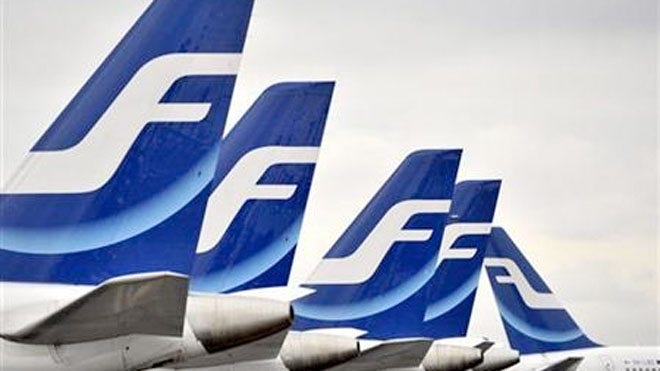
Finnair, has been named the world's safest airline by a European online group that monitors airline safety and crashes. (Reuters)


If you're afraid of flying, you may want to book an Asian or Middle East carrier rather a U.S. airline. That's at least according to a recent report from a website that monitors plane crashes around the world.

Europe's Jet Airliner Crash Data Evaluation Centre (JACDEC) released its list of the world's safest airlines.

According to the report, Finnair is now the world’s safest airline, followed by Air New Zealand, Cathay Pacific and Emirates. None of the top nine ranked airlines had lost an aircraft or had a fatality during the 30-year period, but many had also not been active for the full 30 years. Not one North American carrier made the top 10 list, but none of them made the bottom 10 either.

The center calculates its annual rankings based on aircraft loss accidents and serious incidents over the past 30 years. The resulting index relates that information to the revenue per passenger kilometer (rpk) earned by the airline over the same period.

There were 496 fatalities on commercial passenger flights last year, according to the report, two fewer than in 2011. The most significant involved a Dana Air flight which crashed in Nigeria, killing 169 people, and a Bhoja Air flight which crashed in Pakistan, killing 127.

A total of 30 planes were destroyed and there were 44 “hull losses”, or aircraft write-offs, one less than the previous year.

Here's a look at the best and worst in terms of safety record.

The world’s safest airlines

1. Finnair

2. Air New Zealand

3. Cathay Pacific

4. Emirates

5. Etihad

6. EVA Air

7. TAP Portugal

8. Hainan Airlines

9. Virgin Australia

10. British Airways

The bottom 10

51. SkyWest Airlines

52. South African Airways

53. Thai Airways

54. Turkish Airlines

55. Saudia

56. Korean Air

57. GOL Transportes Aéreos

58. Air India

59. TAM Airlines

60. China Airlines

Read more: http://www.foxnews.com/travel/2013/01/10/world-safest-airlines-revealed/#ixzz2HvApXwp2

Monday, January 07, 2013

NTSB Investigating Japan Airlines Dreamliner Fire


NTSB Investigating Japan Airlines Dreamliner Fire


The National Transportation Safety Board (NTSB) is investigating the cause of a fire in the underbelly of a Japan Airlines Boeing 787 Dreamliner at Boston's Logan International Airport on Monday.


According to airport officials, airline mechanics reported seeing smoke shortly after passengers exited the plane. Firefighters used a thermal imaging device to determine the fire was caused by battery in the auxiliary power unit in the underbelly of the plane that is only used when the plane is on the ground and engines are off.

The fire is the latest problem in a string of incidents involving mechanical and electrical issues with Boeing’s 787.

Back in July, NTSB investigated an engine failure on a 787 that occurred during preflight runway testing in South Carolina, and found the failure was the result of a fractured fan on the engine mid-shaft. In December, FAA issued an airworthiness directive requiring Boeing to inspect all in-service 787s for fuel leaks. Also in December, a United Airlines 787 made an emergency landing due a failed generator.

During an interview with CNBC in mid-December, Boeing CEO and Chairman Jim McNerney referred to the issues as “the normal number of squawks on a new airplane.” More

Thursday, January 03, 2013

Not a Blimp, Not a Plane: The Gigantic Aeroscraft Is Ready, and It’s Awesome


Full size

AEROSPACE
JAN 3, 2013 5:43 PM60,683 244


Not a Blimp, Not a Plane: The Gigantic Aeroscraft Is Ready, and It’s Awesome
Jesus Diaz

This is a new type of rigid aircraft. It's not a blimp, and it's not an airplane, but this thing has the potential to alter the way we understand travel and completely change military transportation. You can see a video of its first move here.

According to the company, "the final configuration and vehicle systems integration functionality testing has been completed as the Aeroscraft subscale demonstration vehicle reaches the finish line." The aircraft will enter a flying tests phase over the next 60 days. After they are done with the testing, they will build the full scale version. Yes, this gigantic aircraft is only a small version of what's coming. Imagine that.

Aeros CEO Igor Pasternak thinks that "this is truly the beginning of a vertical global transportation solution for perhaps the next 100 years." Indeed, it may become just that. Imagine having the capability of transporting huge amounts of material or people across any distance, without the need of any ground infrastructure.

Civilian versions would be able to offer air cruises at any altitude. Just like a cruise ship but over land. Imagine taking the most awesome trip over a three or four days, from New York to San Francisco, slowly flying over the Grand Canyon or the Rocky Mountains, watching the incredible scenery while sipping on a cocktail or comfortably having dinner in a restaurant with huge glass windows. Then, at night, you sleep in your comfortable room. That's what the full-size Aeroscraft will be able to offer and I will be the first one in line to experience it.


There will also be cargo and military versions too, capable of transporting anything from ISO-standard containers—like any cargo ship—to tanks and hundreds of soldiers.

I can't wait to see these giants cruising over Earth's skies. [Aeroscraft]


Friday, December 21, 2012

Inside China's Secret Arsenal


Inside China's Secret Arsenal
The Chinese government is rapidly building a bigger, more sophisticated military. Here’s what they have, what they want, and what it means for the U.S.
By Peter W. SingerPosted 12.20.2012 at 9:00 am19 Comments


Dark Sword Drone Nick Kaloterakis
View Photo Gallery

In a single generation, China has transformed itself from a largely agrarian country into a global manufacturing and trading powerhouse. China’s economy is 20 times bigger than it was two decades ago and is on track to surpass the United States’ as the world’s largest. But perhaps most startling has been the growth of China’s ambitious and increasingly powerful military.


Click to see the planes leading China's military innovation


Just 10 years ago, the budget for the People’s Liberation Army (PLA) was roughly $20 billion. Today, that number is more like $100 billion. (Some analysts think it’s closer to $160 billion.) The PLA’s budget is only a sixth of what the U.S. devotes to defense annually, but defense dollars go much further in China, and in the years ahead, Chinese military spending will grow at the same rate as its economy. Meanwhile, Chinese president Hu Jintao has called for the PLA to carry out “new historic missions” in the 21st century—to move beyond the traditional goal of defending the nation’s sovereignty and develop the global military reach of a true world superpower. In some cases, China’s increasing international presence could lead to greater cooperation with the U.S., as it did in 2008 when China joined antipiracy patrols off Somalia. But if American and Chinese forces end up in the same place with different goals, the result could be a standoff between two of the best-equipped militaries in the world.

American officials aren’t just concerned about the amount of money the Chinese military is spending. They’re worried about the technology that money is buying. U.S. military hardware remains a generation ahead of any rival’s, but the Chinese have begun to close the gap. Consider China’s progress in building advanced warplanes. Until recently, American officials thought their F-22 and F-35 aircraft were the world’s only fifth-generation fighters (the name given to a class of stealthy fighter jets developed in the past decade, which are equipped with radar-evading features, high-performance engines and avionics, and networked computer systems). Then, on a 2011 trip to China, Secretary of Defense Robert Gates learned otherwise. While Gates met with Hu Jintao, his hosts “coincidentally” revealed the existence of an advanced new fighter, the J-20, by staging the inaugural public flight over the city of Chengdu.

The J-20 is far from China’s only new aircraft. The PLA is also aggressively upgrading its drone fleet. A decade ago, the army had almost no unmanned aerial vehicles (UAVs). At aviation trade shows today, Chinese contractors display scores of drones under development. Among the most notable: the Yilong (Pterodactyl I) and BZK-005, which greatly resemble the U.S. military’s Predator and Global Hawk, respectively. China’s future UAVs may also get a boost from American technology: Iran has reportedly given Chinese scientists access to the RQ-170 advanced spy drone that went down in its territory last year.

Additionally, China is investing heavily in its navy. Today, the U.S. is the only country that can send aircraft carriers loaded with fighter jets to any corner of the globe. The PLA would like to change that. The Chinese have spent the past few years retrofitting a 65,000-ton Soviet aircraft carrier (which the PLA acquired using a fake travel agency as a front) with new engines and weapons including Flying Leopard surface-to-air missile batteries and automated air defense machine-gun systems. The ship, called the Liaoning, can carry approximately 50 aircraft, including the Shenyang J-15 Flying Shark, a fighter jet that may be as capable as an F-18. China is also building stealthy 8,000-ton destroyers, along with nuclear submarines and amphibious assault ships. A new 36,000-ton cruise ship modified for military purposes, the Bahai Sea Green Pearl, can carry more than 2,000 soldiers and 300 vehicles. With its new naval muscle, China has dispatched troops and police to U.N. peacekeeping operations in places as far-flung as Africa and Latin America.

* * *


In some ways, China’s rise echoes that of imperial Germany at the turn of the 20th century. At the time, Britain was the world’s undisputed economic and military superpower. When Germany decided to build battleships to match the Grand Fleet’s dreadnoughts, the two nations entered an arms race that helped set the stage for the first world war. But when war broke out, Britain didn’t lose a single battleship to Germany’s High Seas Fleet. German mines and submarines, on the other hand—new technologies that arrived unexpectedly and changed the rules of battle—sunk 13 British battleships.

Similarly, the PLA has more to gain by developing new technologies than by racing to match American sea and air power. China doesn’t have to amass a navy as powerful as the American fleet if it can make the seas too dangerous for U.S. ships to travel. To that end, the PLA is acquiring weapons such as mobile, truck-launched anti-ship ballistic missiles and radar-evading, ramjet-powered Sunburn cruise missiles, which tear toward their targets at Mach 2.5, giving defenses only seconds to respond.

China could also easily go after American vulnerabilities in space. More than 80 percent of U.S. government and military communications, which direct everything from soldiers in the field to precision missile strikes, travel over satellites. GPS satellites control the movement of 800,000 U.S. military receivers on everything from aircraft carriers to individual bombs and artillery shells. The system isn’t foolproof: In early 2010, a GPS “glitch” left almost 10,000 of these receivers unable to connect for days.

Meanwhile, China is also expanding its ability to knock things out of space. In addition to its proven satellite-killing missiles, the PLA is developing maneuverable microsatellites that would act like tiny space kamikazes, along with directed-energy (laser) devices that could blind or melt U.S. systems in space. In 2007, Senior Colonel Yao Yunzhu of the Chinese Academy of Military Science (the highest research institute in the PLA) announced that the U.S. wouldn’t be the world’s only “space superpower” for long. The Chinese plan to send more than 100 civilian and military satellites into orbit in the next decade, and the PLA is testing what appears to be an unmanned, reusable space plane.

China’s most potent new capability, though, might be what the PLA has called “informationized warfare,” or cyber war. Just as the U.S. military has created its own Cyber Command, the PLA has assigned more than 130,000 personnel to cyber warfare programs. And while Secretary of Defense Leon Panetta has warned about a potential cyber Pearl Harbor, the greater threat might be the theft of U.S. government secrets and intellectual property. So far, operations thought to have originated in China have compromised sensitive networks in the State Department as well as computers involved in the F-35 joint strike fighter program.

* * *


In the 1984 movie Red Dawn, one character explained why war between the U.S. and the Soviet Union seemed inevitable: “Two toughest kids on the block, I guess. Sooner or later, they’re gonna fight.” A few years ago, when Hollywood set out to remake the movie, the filmmakers updated the script by replacing the Soviet bad guys with the Chinese. Then real-world economics came into play. To avoid losing access to China’s multibillion-dollar film market, they digitally switched the adversary to North Korea in postproduction.

The episode underscores an important point: Unlike the U.S. and the Soviets, the U.S. and China are bound together by hundreds of billions of dollars in mutual trade and investments. War between the two countries would be mutually ruinous. Leaders on both sides know it. American and Chinese forces will eye each other suspiciously, and the relationship may become tense. But recall that the much feared war between the U.S. and Soviets—the issue that defined world politics for the second half of the 20th century—never did break out. With so much to lose, the two toughest kids decided it wasn’t worth it to fight.

Peter W. Singer is director of the 21st Century Defense Initiative and a senior fellow in foreign policy at the Brookings Institution. This article appeared in the January issue of Popular Science.