

Tuesday, December 29, 2015


Saturday, December 26, 2015
Air Fete 1992 Air Show
Air Fete 1992.Raf Mildenhall 1992 filmed from ( Johns field ) .
Posted by Jetnoiseforever on Friday, October 23, 2015
F-4 Phantom Action
A wish i was there NOW moment.when the phantom was king of A.C.M.I filmed in hi8
Posted by Jetnoiseforever on Tuesday, December 22, 2015
Wednesday, December 23, 2015
100 Years of Commercial Aviation
One year ago today I uploaded this video, which honors 100 years of commercial aviation. I think it still is a very powerful video, and if you haven't seen it yet, give it a view, there are a few fun surprises in their. Can you name all the planes?- N899GS | Co-FounderYoutube Mirror: https://www.youtube.com/watch?v=w2-DycqlpkQ
Posted by World of Aviation on Monday, June 8, 2015
UPS Boeing 767 Bad Landing LAX
UPS Boeing 767-300ERF slamming it down at LAX! Notice how the rear part bounces off the runway! This could have ended really bad, luckily the front gear managed to stay put! - Captain K, Co-Founder
Posted by World of Aviation on Wednesday, December 23, 2015
Tuesday, December 22, 2015
AWESOME DC-6 LANDING - MUST TO SEE
AWESOME DC-6 LANDING - MUST TO SEE
Increíble Douglas DC-6 aterrizando en tierra :O :O :O www.facebook.com/wannaflypage (Y)
Posted by wannafly on Saturday, March 28, 2015
Monday, December 21, 2015
Insane Future Weapon Concepts
Insane Military Concepts - Stealth Anti-Tank/Bomb podsThe future is a dangerous place indeed! 2mins 40s is insane
Posted by The Forces Feed on Thursday, December 10, 2015

Wednesday, December 16, 2015
Monday, November 30, 2015
Amazon unveils new Prime Air drone prototypes

Amazon unveils new Prime Air drone prototypes
 Brett Molina, USA TODAY11:09 p.m. EST November 29, 2015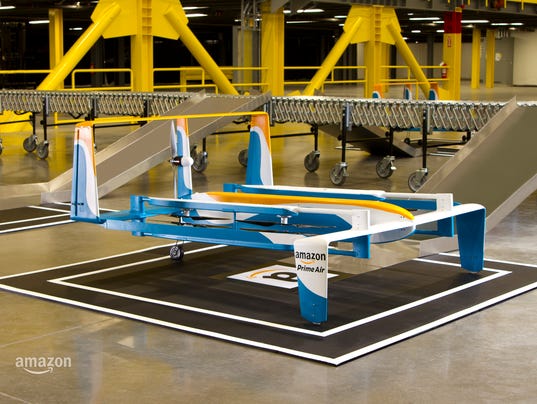
(Photo: Amazon)
1223CONNECTTWEET 114LINKEDIN 50COMMENTEMAILMORE
Amazon revealed the latest prototype of drones it will deploy as part of its Prime Air service using the unmanned aerial devices to deliver packages in under 30 minutes.
According to details released Sunday by the online retailing giant, Amazon says the drones weigh 55 pounds and can carry packages weighing up to 5 pounds. The drones fly under 400 feet and use "sense and avoid" technology to dodge potential obstacles en route to its delivery destination.
"We are testing many different vehicle designs and delivery mechanisms to discover how best to deliver packages in a variety of environments," reads a statement from Amazon. "We have more than a dozen prototypes that we’ve developed in our research and development labs. The look and characteristics of the vehicles will evolve over time."
A video released by Amazon shows the drone scanning an area near the delivery address to find a landing spot, followed by a hatch opening from the bottom to drop the package. Amazon says they are testing drones in "multiple international locations."
The company says the service will launch once the company has "the regulatory support needed to safely realize our vision."
In March, the Federal Aviation Administration granted Amazon approval to fly drones for research into the Prime Air service after first revealing plans to work with drones for deliveries two years ago.
Other companies are also exploring drones as a new method of package delivery. Earlier this month, Walmart sought permission from the FAA to start drone testing,while Google reportedly revealed during an air traffic control convention in Washington, D.C., that it wants to launch a drone service in 2017.
Follow Brett Molina on Twitter: @brettmolina23.
1223CONNECTTWEET 114LINKEDIN 50COMMENTEMAILMORE
Saturday, November 28, 2015
Toddler loses eye after drone propeller sliced through it
Saturday 28 November 2015 | UK News feed
Toddler loses eye after drone propeller sliced through it
An 18-month-old boy was left blind in one eye when an out-of-control drone hit him in the face

Oscar Webb with his mum, Amy Roberts Photo: BBC

By Eleanor Steafel
12:42PM GMT 28 Nov 2015
An 18-month-old boy lost his left eye when he was hit in the face by an out-of-control drone.
Oscar Webb was left blind in one eye when a propeller sliced through his eyeball while he was playing in the garden.
Doctors fought desperately to save Oscar's eye but they were forced to remove it as the damage was too severe.
Speaking on Watchdog on Thursday, Oscar's mother told of the moment she realised how bad the accident had been, as she raced to hospital with her son.

Amy and Anita Roberts talking to the BBC's Watchdog programme Photo: BBC
Amy Roberts, from Stourport-on-Severn, Worcestershire, said: "What I saw, I can still see it now, it was the bottom half of his eye and it's the worst thing I've ever seen.
"I just hoped and prayed all the way there that what I saw wasn't true and wasn't real.
"I can't really even remember what I was thinking at the time. I just remember waiting for someone to come and say it was OK.
"They (the doctors) did say that it was one of the worst eye incidents they'd seen. It was hard, I cried that much that even the consultant, it brought tears to her face."
Surgeons performed several emergency operations to try to save Oscar's eye but the drone had damaged it beyond repair and Oscar now faces having a series of further operations before he can have a prosthetic eye fitted.
The accident, which happened seven weeks ago, occurred when a drone being flown by family friend Simon Evans spiralled out of control.

Amy Roberts, from Stourport-on-Severn, Worcestershire, said: "What I saw, I can still see it now, it was the bottom half of his eye and it's the worst thing I've ever seen.
"I just hoped and prayed all the way there that what I saw wasn't true and wasn't real.
"I can't really even remember what I was thinking at the time. I just remember waiting for someone to come and say it was OK.
"They (the doctors) did say that it was one of the worst eye incidents they'd seen. It was hard, I cried that much that even the consultant, it brought tears to her face."
Surgeons performed several emergency operations to try to save Oscar's eye but the drone had damaged it beyond repair and Oscar now faces having a series of further operations before he can have a prosthetic eye fitted.
The accident, which happened seven weeks ago, occurred when a drone being flown by family friend Simon Evans spiralled out of control.
One of Mr Evans' drones Photo: BBC
Mr Evans, who was an experienced drone operator before the accident, described the moment it hit Oscar.
He said: "It was up for about 60 seconds. As I brought it back down to land it just clipped the tree and span round.
"The next thing I know I've just heard my friend shriek and say 'Oh God no' and I turned around and just saw blood and his baby on the floor crying."
Mr Evans said he has not flown the gadget since the accident as the sight of one makes him feel "physically sick".
Oscar's mother said she wanted to warn others how dangerous drones can be.
"You don't realise the dangers, you don't expect something so severe to happen from what people call toys, I wouldn't class them as toys," she said.
Oscar's grandmother, Anita Roberts, who contacted the BBC after seeing a programme about the devices said it had been very upsetting.
"You can't take it in, the shock of it all, it's too much really," she said.
"You wish you could have been there instead of him, he's a baby."
The Civil Aviation Authority has released guidelines for how to fly drones safely and there will be a public consultation before a government strategy is published in 2016.
© Copyright of Telegraph Media Group Limited 2015
Mr Evans, who was an experienced drone operator before the accident, described the moment it hit Oscar.
He said: "It was up for about 60 seconds. As I brought it back down to land it just clipped the tree and span round.
"The next thing I know I've just heard my friend shriek and say 'Oh God no' and I turned around and just saw blood and his baby on the floor crying."
Mr Evans said he has not flown the gadget since the accident as the sight of one makes him feel "physically sick".
Oscar's mother said she wanted to warn others how dangerous drones can be.
"You don't realise the dangers, you don't expect something so severe to happen from what people call toys, I wouldn't class them as toys," she said.
Oscar's grandmother, Anita Roberts, who contacted the BBC after seeing a programme about the devices said it had been very upsetting.
"You can't take it in, the shock of it all, it's too much really," she said.
"You wish you could have been there instead of him, he's a baby."
The Civil Aviation Authority has released guidelines for how to fly drones safely and there will be a public consultation before a government strategy is published in 2016.
© Copyright of Telegraph Media Group Limited 2015
Sunday, November 22, 2015
Saturday, August 22, 2015
Monday, August 03, 2015
Challenger, Columbia wreckage on public display for 1st time
Challenger, Columbia wreckage on public display for 1st time
Mon, 08/03/2015 - 9:55am
MARCIA DUNN, AP Aerospace Writer
Get today's electronic OEM design headlines and news - Sign up now!
 This Tuesday, July 21, 2015 photo shows a side body panel of space shuttle Challenger, left, and the cockpit widows of Columbia, right, displayed at the Forever Remembered exhibit and memorial for the astronauts that perished on the two shuttles at the Kennedy Space Center Visitor Complex, in Cape Canaveral, Fla. (AP Photo/John Raoux)CAPE CANAVERAL, Fla. (AP) — NASA is offering up wreckage from the Challenger and Columbia for public view after hiding it from the world for decades.
A new exhibit at Kennedy Space Center features two pieces of debris, one from each lost shuttle, as well as poignant, personal reminders of the 14 astronauts killed in flight.
It is an unprecedented collection of artifacts — the first time, in fact, that any Challenger or Columbia remains have been openly displayed.
NASA's intent is to show how the astronauts lived, rather than how they died. As such, there are no pictures in the "Forever Remembered" exhibit of Challenger breaking apart in the Florida sky nearly 30 years ago or Columbia debris raining down on Texas 12 years ago.
Since the tragic re-entry, Columbia's scorched remains have been stashed in off-limits offices at the space center. But NASA had to pry open the underground tomb housing Challenger's pieces — a pair of abandoned missile silos at neighboring Cape Canaveral Air Force Station — to retrieve the section of fuselage now on display.
The exhumation was conducted in secrecy. Everything about the exhibit, in fact, was kept hush-hush during the four years it took to complete the project, out of respect to the dead astronauts' families.
June Scobee Rodgers had never seen an actual remnant of her husband's destroyed shuttle, Challenger, until previewing the exhibit just before its low-key opening at the end of June.
Displayed in a dimly lit room: a 12-foot section of the left side body panel of Challenger, standing vertically and bearing the gouged and scraped but still brilliantly colorful U.S. flag, and the charred frames for Columbia's cockpit windows, seemingly floating at eye level.
"Sad, yes," to see the wreckage but it is "a wonderful memorial" to the shuttles, Scobee Rodgers said. The items representing the astronauts, on the other hand, are a "truly fitting" reminder of who they were as individuals.
Challenger commander Francis "Dick" Scobee's display case, on the left side of the exhibit's main corridor, contains the leather helmet from the Starduster biplane he and June used to fly, and his blue "TFNG" T-shirt from the Astronaut Class of 1978, nicknamed the Thirty-Five New Guys.
Across the hall on the right are Columbia commander Rick Husband's scuffed cowboy boots and well-worn Bible opened to Proverbs. There's a display case for each astronaut, filled with personal items, although not all families contributed, including schoolteacher Christa McAuliffe's.
"Forever Remembered" is a permanent exhibit, part of a larger display centered on the retired space shuttle Atlantis. NASA opted to keep Atlantis at Kennedy, the shuttle launch site, after Atlantis closed the program with the final mission in 2011.
The entrance to the new exhibit is directly beneath the nose of Atlantis, which is suspended with its payload bay doors wide open as though perpetually orbiting Earth.
One recent afternoon in July, tourists filled the predominantly blue hallway, pausing in front of the astronaut display cases. One woman wondered aloud which shuttle burned up and which one blew up. A few young children scampered about, their parents shushing them given the solemnity of the place.
A few weeks after visiting the exhibit, Scobee Rodgers noted in a phone interview that much of the world's population wasn't even born yet when Challenger went down in 1986.
"It's mostly history for the general public. It's very personal for us," she said.
Amber DiSalvatore — an Apopka, Florida, resident touring the space center with her husband and two children — was 4 years old at the time of Challenger. Seeing the actual wreckage — along with Husband's Bible — brought tears to her eyes.
The astronauts sacrificed their lives for exploration, said DiSalvatore, "so it's something that everybody — every human being — should know."
In the aftermath of the Feb. 1, 2003, Columbia accident, NASA meticulously stored the 42 tons of debris in Kennedy's iconic Vehicle Assembly Building and made them available for research. The space agency displayed a remnant or two of Columbia in a restricted area of the space center and, for the fifth anniversary, organized a traveling in-house exhibit. The relics were intended as safety reminders for the workforce. The three surviving shuttles — Discovery, Atlantis and Endeavour, Challenger's replacement — still were flying then.
After Challenger's accident, NASA wanted it out of sight and out of mind. The Jan. 28, 1986, launch disaster unfolded on live TV before countless schoolchildren eager to see an everyday teacher rocketing toward space. And so Challenger's wreckage — all 118 tons of it, salvaged from the Atlantic — was buried in the pair of former missile silos, 90 feet deep.
The chamber containing this particular fuselage section, in fact, had never been opened — until the "Forever Remembered" exhibit began to take shape.
Determined to avoid any hint of commercialism or sensationalism, NASA took charge of the memorial effort at the visitor complex, which is run by an outside company. The job fell to Michael Ciannilli, a shuttle engineer and test director who had become responsible for the Challenger and Columbia debris.
"Our biggest concern the whole time was doing the right thing," Ciannilli said. "Is this the right time? Is this the right thing?"
As the conversations unfolded over the months then years, Ciannilli entered the underground storage silos to find the proper display piece to represent Challenger.
"I was hoping to find something that would show the beauty of Challenger, the dignity of Challenger, the strength of Challenger, and these are words I don't use lightly," Ciannilli said.
The 12-foot section of fuselage with the flag fit the bill. For Columbia, he chose the cockpit window frames. He said it's like gazing into the eyes of Columbia and thus its soul.
Ciannilli tapped the same preservation company that had worked on the Titanic, for the Challenger and Columbia relics. He sought out soothing, uplifting music for the exhibit.
And, yes, he deliberately kept out real-time scenes of the shuttles disintegrating.
"There's more to this story" than those awful final moments, he said. "Great pains were taken not to have anything sensationalized or exploited."
Above all else, Ciannilli wanted the end result to be respectful.
"I can't stop thinking about it," Evelyn Husband-Thompson, the widow of Columbia's commander, confided in a NASA interview. "As you walk in, you know that you're in a special place."
Get today's electronic OEM design headlines and news - Sign up now!
This Tuesday, July 21, 2015 photo shows a side body panel of space shuttle Challenger, left, and the cockpit widows of Columbia, right, displayed at the Forever Remembered exhibit and memorial for the astronauts that perished on the two shuttles at the Kennedy Space Center Visitor Complex, in Cape Canaveral, Fla. (AP Photo/John Raoux)CAPE CANAVERAL, Fla. (AP) — NASA is offering up wreckage from the Challenger and Columbia for public view after hiding it from the world for decades.A new exhibit at Kennedy Space Center features two pieces of debris, one from each lost shuttle, as well as poignant, personal reminders of the 14 astronauts killed in flight.
It is an unprecedented collection of artifacts — the first time, in fact, that any Challenger or Columbia remains have been openly displayed.
NASA's intent is to show how the astronauts lived, rather than how they died. As such, there are no pictures in the "Forever Remembered" exhibit of Challenger breaking apart in the Florida sky nearly 30 years ago or Columbia debris raining down on Texas 12 years ago.
Since the tragic re-entry, Columbia's scorched remains have been stashed in off-limits offices at the space center. But NASA had to pry open the underground tomb housing Challenger's pieces — a pair of abandoned missile silos at neighboring Cape Canaveral Air Force Station — to retrieve the section of fuselage now on display.
The exhumation was conducted in secrecy. Everything about the exhibit, in fact, was kept hush-hush during the four years it took to complete the project, out of respect to the dead astronauts' families.
June Scobee Rodgers had never seen an actual remnant of her husband's destroyed shuttle, Challenger, until previewing the exhibit just before its low-key opening at the end of June.
Displayed in a dimly lit room: a 12-foot section of the left side body panel of Challenger, standing vertically and bearing the gouged and scraped but still brilliantly colorful U.S. flag, and the charred frames for Columbia's cockpit windows, seemingly floating at eye level.
"Sad, yes," to see the wreckage but it is "a wonderful memorial" to the shuttles, Scobee Rodgers said. The items representing the astronauts, on the other hand, are a "truly fitting" reminder of who they were as individuals.
Challenger commander Francis "Dick" Scobee's display case, on the left side of the exhibit's main corridor, contains the leather helmet from the Starduster biplane he and June used to fly, and his blue "TFNG" T-shirt from the Astronaut Class of 1978, nicknamed the Thirty-Five New Guys.
Across the hall on the right are Columbia commander Rick Husband's scuffed cowboy boots and well-worn Bible opened to Proverbs. There's a display case for each astronaut, filled with personal items, although not all families contributed, including schoolteacher Christa McAuliffe's.
"Forever Remembered" is a permanent exhibit, part of a larger display centered on the retired space shuttle Atlantis. NASA opted to keep Atlantis at Kennedy, the shuttle launch site, after Atlantis closed the program with the final mission in 2011.
The entrance to the new exhibit is directly beneath the nose of Atlantis, which is suspended with its payload bay doors wide open as though perpetually orbiting Earth.
One recent afternoon in July, tourists filled the predominantly blue hallway, pausing in front of the astronaut display cases. One woman wondered aloud which shuttle burned up and which one blew up. A few young children scampered about, their parents shushing them given the solemnity of the place.
A few weeks after visiting the exhibit, Scobee Rodgers noted in a phone interview that much of the world's population wasn't even born yet when Challenger went down in 1986.
"It's mostly history for the general public. It's very personal for us," she said.
Amber DiSalvatore — an Apopka, Florida, resident touring the space center with her husband and two children — was 4 years old at the time of Challenger. Seeing the actual wreckage — along with Husband's Bible — brought tears to her eyes.
The astronauts sacrificed their lives for exploration, said DiSalvatore, "so it's something that everybody — every human being — should know."
In the aftermath of the Feb. 1, 2003, Columbia accident, NASA meticulously stored the 42 tons of debris in Kennedy's iconic Vehicle Assembly Building and made them available for research. The space agency displayed a remnant or two of Columbia in a restricted area of the space center and, for the fifth anniversary, organized a traveling in-house exhibit. The relics were intended as safety reminders for the workforce. The three surviving shuttles — Discovery, Atlantis and Endeavour, Challenger's replacement — still were flying then.
After Challenger's accident, NASA wanted it out of sight and out of mind. The Jan. 28, 1986, launch disaster unfolded on live TV before countless schoolchildren eager to see an everyday teacher rocketing toward space. And so Challenger's wreckage — all 118 tons of it, salvaged from the Atlantic — was buried in the pair of former missile silos, 90 feet deep.
The chamber containing this particular fuselage section, in fact, had never been opened — until the "Forever Remembered" exhibit began to take shape.
Determined to avoid any hint of commercialism or sensationalism, NASA took charge of the memorial effort at the visitor complex, which is run by an outside company. The job fell to Michael Ciannilli, a shuttle engineer and test director who had become responsible for the Challenger and Columbia debris.
"Our biggest concern the whole time was doing the right thing," Ciannilli said. "Is this the right time? Is this the right thing?"
As the conversations unfolded over the months then years, Ciannilli entered the underground storage silos to find the proper display piece to represent Challenger.
"I was hoping to find something that would show the beauty of Challenger, the dignity of Challenger, the strength of Challenger, and these are words I don't use lightly," Ciannilli said.
The 12-foot section of fuselage with the flag fit the bill. For Columbia, he chose the cockpit window frames. He said it's like gazing into the eyes of Columbia and thus its soul.
Ciannilli tapped the same preservation company that had worked on the Titanic, for the Challenger and Columbia relics. He sought out soothing, uplifting music for the exhibit.
And, yes, he deliberately kept out real-time scenes of the shuttles disintegrating.
"There's more to this story" than those awful final moments, he said. "Great pains were taken not to have anything sensationalized or exploited."
Above all else, Ciannilli wanted the end result to be respectful.
"I can't stop thinking about it," Evelyn Husband-Thompson, the widow of Columbia's commander, confided in a NASA interview. "As you walk in, you know that you're in a special place."
Wednesday, July 29, 2015
Subscribe to:
Posts (Atom)