-Those Fantastic Flying Machines-


NEWS AND ANNOUNCEMENTS

Man must rise above the Earth—to the top of the atmosphere and beyond—for only thus will he fully understand the world in which he lives.— Socrates


Google
 

Search This Blog

Monday, October 24, 2011

Boeing Dreamliner Composite Repairs Questioned by U.S. Watchdog


Boeing Dreamliner Composite Repairs Questioned by U.S. Watchdog

Q
Members of the media look at a Boeing Co. 787 Dreamliner for All Nippon Airways Co. in a hanger at Haneda Airport in Tokyo, Japan. The Dreamliner faces four “safety-related concerns” about repairs to the composites used for the fuselage and wings, the GAO said. Photo: Haruyoshi Yamaguchi/Bloomberg
Boeing Co. (BA)’s new 787 Dreamliner, set to fly its first paying passengers next week, faces four “safety-related concerns” about repairs to the composites used for the fuselage and wings, a U.S. agency said.
A review of the Dreamliner, the first airliner built with carbon-fiber reinforced composite plastics instead of metal, was released Oct. 20 by the U.S. Government Accountability Office. The GAO identified four concerns: limited information on the behavior of airplane composite structures; technical issues with the materials’ unique properties; standards for repairs; and training and awareness.
The U.S. Federal Aviation Administration certified the 787 in August following 20 months of flight tests, after requiring that Boeing take extra steps to demonstrate its safety. The GAO was asked by three members of Congress to review the FAA’s certification process and planned oversight once the model enters service, and consulted experts on repair and maintenance.
“None of the experts believed these concerns posed extraordinary safety risks or were insurmountable,” the GAO said in its report. Still, while the FAA is taking action to address the matters, “until these composite airplanes enter service, it is unclear if these actions will be sufficient,” the report said.
The 250-seat Dreamliner uses the lighter-weight composites, new engines and the first all-electric system to help it fly farther with less fuel.

Charter Flight

Chicago-based Boeing delivered the plane last month to its first customer, Tokyo-based All Nippon Airways Co., more than three years late after Boeing struggled with the new materials and manufacturing processes. The Dreamliner is scheduled for a charter flight from Tokyo toHong Kong on Oct. 26 and will enter regular service the following week.
“Regardless of the materials we use, Boeing employs the same rigorous methods to deliver products that are safe for the flying public and efficient for airlines,” said Marc Birtel, a Boeing spokesman in Seattle. “Composite materials have been used in commercial airplanes for decades.
‘‘The concerns in the GAO report are limited to support activities,’’ which already are being addressed through an industrywide effort involving regulators, manufacturers, operators and maintenance and repair organizations, Birtel said.
Boeing has used composites for other airliners before, including the 777, though never for the whole fuselage and wings as in the 787.

Repairs Different

The Dreamliner’s fuselage is made of reinforced carbon fibers spun around a barrel mold and baked, so repairs will be handled differently than with traditional aircraft that are built of riveted aluminum panels.
‘‘The FAA conducts a rigorous certification process for every new airplane that ensures it meets the highest levels of safety, and the FAA has certified commercial aircraft that use composite materials for decades,’’ the agency said yesterday in a statement. ‘‘In addition to the extensive certification requirements, the FAA’s robust safety oversight system is designed to detect and correct any issues that may emerge during actual flight.’’
The GAO’s review was requested by Representative Eddie Bernice Johnson of Texas, Representative Donna Edwards of Maryland and Representative Jerry Costello of Illinois, all Democrats.
They wrote a letter to FAA Administrator Randy Babbitt on Oct. 20, asking that he explain what ‘‘practical and proactive’’ steps are being taken to ensure ‘‘robust oversight’’ of the 787’s maintenance and repair.

Training Personnel

As the model enters service, the FAA will need to train more personnel to deal with composites and certify more repair centers to handle work on the new planes, the GAO report said. Boeing has orders for about 800 of the 787s from carriers around the world, making it the company’s fastest-selling new plane ever.
‘‘Composite-built aircraft present opportunities as well as unique and complex challenges, and we need to make sure the FAA is addressing all of these challenges appropriately,” Johnson said yesterday in a statement.
All Nippon Airways’s first Dreamliner already suffered some slight surface damage to the engine cowling when it hit a passenger boarding bridge earlier this month, Flightglobal reported Oct. 19. The plane resumed regular flight tests with the carrier in Japan after the company did some checks, the trade publication said.
To contact the reporter on this story: Susanna Ray in Seattle at sray7@bloomberg.net
To contact the editor responsible for this story: Ed Dufner at edufner@bloomberg.net

Friday, October 21, 2011

Cathay Pacific Debuts 747-8F


Cathay Pacific Debuts 747-8F
Yesterday marked the ceremonial delivery of Cathay Pacific's first 747-8F. 747-8 Program Chief Elizabeth Lund and Cathay Pacific Cargo Director Nick Rhodes were on hand for certificate signing, ribbon cutting, and discussions of the program and what the 747-8F will do for Cathay.

The star of the show, however, was B-LJA (msn: 39238), unveiled dramatically to an eager crowd at the Future of Flight Museum, located at the northwest corner of Paine Field. B-LJA is painted in a special "Hong Kong Trader" color scheme designed to harken back to when Cathay first launched 747 main-deck cargo operations in the early 1980s. Cathay's first freighter was a 747-200B, VR-HVY (msn: 22306) christened "Hong Kong Trader," it served with Cathay until 2008.

The first Cathay 747-8F to be physically delivered and potentially enter service is expected to be B-LJE (msn: 39242), which may be delivered in the next few days. Several more Cathay 747-8Fs are on the flight line at Paine Field being readied for delivery, while one more is in the final assembly position in the factory. Altogether Cathay has ten 747-8Fs on order, with delivery through the end of 2012. The -8Fs will be used exclusively on trans-Pacific routes from Hong Kong, with services to other destinations operated by a mix of 747-400Fs, -400ERFs and -400BCFs in the Cathay fleet. Beginning in 2014 Cathay will begin taking delivery of new 777Fs, which are being acquired to serve intra-Asia routes.

Photographer: Alex Kwanten

Thursday, October 20, 2011

MASkargo Airbus A330-200F 9M-MUA


Wednesday, October 19, 2011

F-35B Sea Trials Showcase Promising Results


F-35B Sea Trials Showcase Promising Results


Published: October 18, 2011
Text Size

Aboard the USS Wasp: The sleek, angular plane pulls up to the flight line. The jet's single engine rumbles slowly while waiting for the high-sign to takeoff.


Once the member of the deck crew threw his thumbs up, the jet's center fan -- which gives the F-35 the ability to take off from smaller carriers and land vertically on those same ships -- whirred to life. The sound from the fan, once fully spooled up, combined with the roar from the F135 engine was deafening even from the upper decks where I stood.
Suddenly -- with almost no warning -- the jet jumps up from the flight line, hurtles down the short runway and roars hard toward the blue sky in a burst of heat, noise and smoke. In a few short minutes, it was gone.

After taking a lazy loop over the ocean after takeoff, the jet banked hard toward the ship and made what seemed to be an incredibly low pass over the control tower. After making that pass, the F-35B circled back again, but this time to begin the vertical landing maneuver.

As the fighter came back toward the ship, the center fan spun back to life again, bringing the jet to a virtual stop in mid-flight. The F-35B hovered over the landing zone, air bellowing from the engine and center fan and throwing up massive sea spray around the deck and surrounding area near the landing zone below.

The vertical landing evoked sense of controlled chaos. The fighter hovered and then seemed to just settle down on the deck, its landing gear making a dull thump sound once it touched down. The gentle motion didn't seem to match the violent whine of the engine and the heat from the fan that you could feel in your chest.

Like the takeoff minutes before, the landing was over in minutes. The center fan shut down almost immediately, the engine throttled back down to a dull buzz and the deck crew scrambled all around the jet -- getting it ready to do it all over again.

I watched the F-35B test jet do that twice today, and as we moved below decks to talk to program officials, I could hear the fighter making more passes over the ship.

These flight test were the culmination of an important few weeks for the F-35B, beginning with the first ever sea-based, vertical landing of the jet earlier this month.

Since that landing, program officials have addressed a handful of small issues with the two F-35B test jets, Col. Roger Cordell, director of the F-35 Integrated Test Facility, said.

Program engineers corrected a fuel leak in one of the jets, BF-2, early on during the flight trials, Cordell said, in addition to a few other minor anomalies. They were quickly corrected and did not affect the testing schedule set by the program office, he added.

When asked for his assessment of the fighter's progress during the sea trials, Cordell was clear: "We are running where we intended to crawl."

Using the AV-8B Harrier as an example, Cordell said that Marine pilots had to "fight" the Harrier's control systems to fly it safely and correctly. The intuitive controls of the F-35B, he said, eliminates that problem and lets pilots concentrate "on fighting the enemy."

Program officials here added the fighter's progress during the trials came as no surprise, claiming the jet's overall performance was never in doubt.

Less than a year ago, then Defense Secretary Robert Gates put the F-35B under a two-year probation, pointing to cost growth and schedule delays. The fighter's performance during these sea tests may pacify some of the program's critics. But doubt over the F-35B persist at some of the highest levels inside the Pentagon.

New Chairman of the Joint Chiefs of Staff Gen. Martin Dempsey gave a less-than-ringing endorsement of the program during his testimony before the House Armed Services Committee last week.

Given the tremendous budget pressures the department was now under, Depmsey questioned whether DoD could afford to buy all three versions of the F-35. Along with the Marine Corps' F-35B, other versions for the Air Force and the Navy are also being built.

But one strike group commander told me that no matter how much money the Pentagon can save by killing the F-35B, the Marine Corps cannot afford to lose the fighter from the arsenal.

By getting the JSF on the decks of the Marines fleet of amphibious ships, those forces can take "the next step to respond" to any kind of combat scenario "across the full spectrum of operations," Rear Adm. Kevin Scott, commander of Expeditionary Strike Group Two, said.

With the jet, Scott said he could push his forces farther and respond faster than he could with the current fleet of attack jets and helicopters at his disposal.

Scott wouldn't speculate on what would happen if the F-35B did not make it into the arsenal. The one-star simply said he and his troops would do the job they were assigned with whatever assets they've got. But he said the F-35B would make his job, and that of his fellow combat commanders, a lot easier.

Tuesday, September 27, 2011

Gorgeous takeoff of 1st ANA 787

Boeing Celebrates Delivery Of Long-Awaited 787


Boeing Celebrates Delivery Of Long-Awaited 787


Sep 27, 2011


In a rain-soaked delivery ceremony Monday outside the Boeing factory’s huge hangar doors, Boeing executives were apologetic about the 787 program’s tardiness but strongly asserted the value of the technology they pursued and the global manufacturing base they used to achieve it.
Boeing Commercial Airplanes President and CEO Jim Albaugh declared the 787 “the biggest innovation in commercial aviation since the 707 was built more than 50 years ago.”
Pat Shanahan, head of all aircraft programs who was called in 2006 to right the troubled 787’s production and flight test efforts, responded to critics who charged that Boeing was pushing technology too far in seeking to build the industry’s first aircraft with single-piece composite fuselage barrels. “I’ve dreamed of this moment for a long time—actually for longer than I’d have wanted,” he said, drawing laughter from thousands of mechanics, engineers, quality control, systems and test employees gathered for the event. “As we all know, the journey here wasn’t easy or smooth, but great inventions never are.”
Proclaiming the 787 “the world’s first all-composite airplane,” Shanahan rattled off the technical feats Boeing achieved to overcome challenges, not the least of which were the aircaft's composite fuselage and wings. As he predicted, the company’s “global production system will produce at rates this industry has never seen,” —or the company—as one information technology specialist said in an aside.
Shanahan's reference is apt because the delivery ceremony hardly marks an end to Boeing’s 787 challenges. Chief among them is its ambitious goal of jumping from the current production rate of two aircraft per month to 10 by the end of 2013.
Boeing says the 787 does not rely on a greater number of suppliers than its last big program, the 777. But their role is far greater. Boeing sought major partner suppliers to tap into their expertise in structures, systems and components, and called on them to play a greater role in terms of manufacturing integration and testing. But the company reacted when tests showed the design needed to be beefed up, most notably when wing stringers required strengthening where they join the body and prompted a frustrating six-month delay just as flight testing was due to get under way. It finally started on a similarly rainy, gusty day on Dec. 15, 2009.
The 787 is the first airplane that All Nippon Airways has launched, and the carrier’s executives have enthusiastically embraced it despite waiting an additional 39 months beyond the initial May 2008 delivery date. “I cannot wait to see the day when the skies of the world are filled with 787s,” ANA President and CEO Shinichiro Ito declared.
The winged backdrops for the ceremony were test aircraft ZA002, the first in ANA’s livery and the 24th 787 produced; it will be the second delivered, in October. ANA will take delivery of the eighth aircraft produced, which was parked nearby for a party Monday evening. It is scheduled to lift off about 6:30 a.m. Tuesday for the flight to Tokyo. It will start its career in a special charter service from Tokyo Haneda Airport on Oct. 26 and enter regular services on Nov. 1 from Haneda to Hiroshima and Okayama.

Afghan Air Force Ce182s delivered through Prestwick


Wednesday, September 21, 2011

Did the seat break? New theory suggests Reno crash pilot's chair may have broken moments before impact


Did the seat break? New theory suggests Reno crash pilot's chair may have broken moments before impact

Last updated at 11:26 AM on 21st September 2011
A new theory has emerged from last weeks deadly Reno air crash suggesting the pilot's seat may have become dislodged.
According to an aviation mechanic, a picture taken seconds before the plane plummeted into a crowd of spectators - killing 11 - appears to show an empty cockpit where veteran pilot 74-year-old Jimmy Leeward should be.
The news comes as more harrowing details emerged about the victims and their families involved in last Friday's tragedy.
Out cold? A P-51 Mustang airplane is shown right before crashing at the Reno Air show on Friday. The pilot is absent from the cockpit
Seat:  The  P-51 Mustang airplane is shown right before crashing at the Reno Air show on Friday. The pilot is absent from the cockpit, leading a mechanic to suggest the pilot's seat may have broke free
Lose: A mechanic, who has worked on planes similar to the P-51 Mustang (pictured) - added the seat may have slipped or become dislodged, causing the pilot to lose control
Speaking to Fox News, mechanic J.R. Walker said that even if Leeward had passed and slumped in his seat he would still be visible in the cockpit canopy.
The mechanic, who has worked on planes similar to the P-51 Mustang - added the seat may have slipped or become dislodged, causing the pilot to lose control.

A Nevada man who took his 12-year-old to see racing pilots was identified Tuesday as the death toll rose to 11.
Virginia Craik told The Associated Press that her son, 45-year-old John Craik, of Gardnerville, died from injuries after a WWII-era fighter plane dived into a crowd of fans Friday during the nation's premier aviation competition.
Yesterday evening the Washoe County Medical Examiner’s Office also identified James McMichael, 47, of Graham, Wash. as the 11th victim of the Reno Air Races plane crash.
Her grandson was with his dad when the plane crashed. Family members said the boy was not seriously injured and is back in school.
Nosedive: The aeroplane approaches the ground right before crashing during the air show in Reno, Nevada
That means nine of the people killed during the air races have been identified and at least two others have not.
More than 70 people were treated for injuries, some of them life threatening, in the unexplained crash that also took the life of stunt pilot Leeward.
That dramatic injury toll was stoking fears across the nation, as relatives and friends flooded Reno officials with inquiries about the whereabouts of spectators.
Emergency officials were trying to compile a list of missing people Tuesday.

'You're responding to someone who was with a loved one at one moment and the loved one is not there the next moment,' said Kathy Jacobs, executive director of the Crisis Call Center in Reno.
'They're looking for answers, and the reality is we can't answer their questions right away.'
Leeward's Galloping Ghost Mustang fighter plane disintegrated into a cloud of dust and debris during Friday's race.
'Cause of crash': Was this missing piece of the tail, believed to be the P-51 Mustang's 'trim tab' the reason why the plane suddenly cwent out of control?
The National Championship Air Races drew thousands of people to Reno every September to watch various military and civilian planes race.
Local schools often held field trips there, and a local sports book took wagers on the outcomes.
During the races, planes flew wingtip-to-wingtip as low as 50 feet (15 meters) off the ground. The competitors follow an oval path around pylons, with distances and speeds depending on the class of aircraft. Pilots reached speeds of up to 500 mph.
Leeward, was the 20th pilot to die at the races since it began 47 years ago, but Friday's crash was the first where spectators were killed. Some of the injured described being coated in aviation fuel that burned.
Leeward and his team had modified the plane beyond recognition, taking a full 10 feet off the wingspan and cutting the ailerons - the back edges of the wings used to turn the aircraft - by roughly 28 inches.
Leeward was a veteran air racer from Ocala, Florida, who flew in Hollywood films. His father worked in aviation and taught him the trade.
He was married with two adult sons. Leeward loved speeding, on the ground or in the air, and had recently taken up racing cars.
The others killed who have been identified were Sharon Stewart, 47, of Reno; Greg Morcom, 47, of Marysville, Wash.; George Hewitt, 60, and Wendy Hewitt, 57, both of Fort Mohave, Ariz.; Michael Wogan, 22, of Scottsdale, Ariz.; and Regina Bynum, 53, of San Angelo, Texas.


Read more: http://www.dailymail.co.uk/news/article-2039871/Reno-air-crash-2011-Pilots-chair-broken-moments-impact.html#ixzz1YbFl1HXb

Thursday, September 01, 2011


Boeing Introduces the 737 MAX – Really?

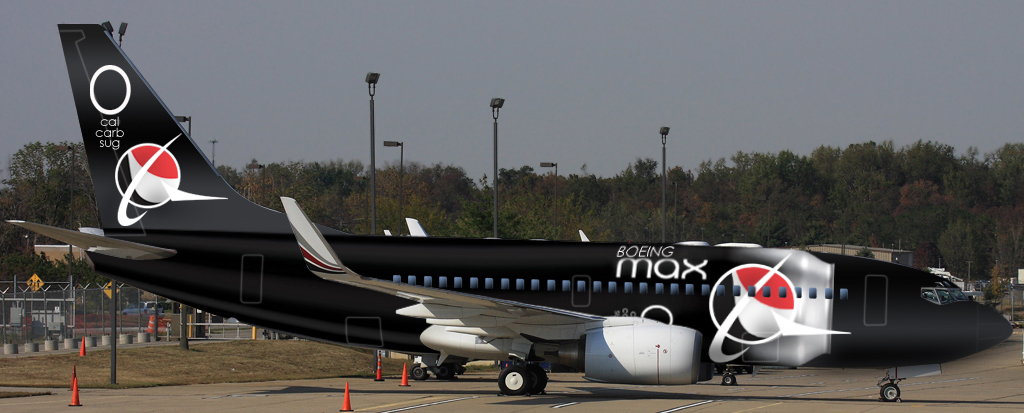
Is this the new Boeing 737 MAX livery? Nope, but a great Photoshop by Lyle Jansma.
There are two stories with the unveiling of the new Boeing 737 MAX: the actual aircraft (which promises greater efficiency) and the choice of the name “MAX.” When I heard about Boeing’s name for their 737 re-engine, for some odd reason, I got really thirsty and wanted a Pepsi… weird. While this story should lead with the differences of the new 737, I feel I have to talk about the new name first, since it is the most shocking.
Boeing is a smart company that makes respected aircraft. They have a history of creating legendary names:StratocruiserStratoliner, and of course Dreamliner. The name “MAX” is just not in the same category in my opinion — it seems lazy and very “been there, done that.”
There has been a lot of speculation on what Boeing might call their 737 Re-engine: the 737RE, 737-8, 737NNG. Many people have been excited to find out the new name. Reading different reactions on the internet, it appears I am not the only one who is disappointed.
According to Boeing, these next, next generation aircraft will be written as the “737 MAX 7″, “737 MAX 8″ and “737 MAX 9″ without dashes. I think I might be writing them as 737-7, 737-8, 737-9 with dashes and no “MAX.”
The 737 Next Generation was a great name. I even like Airbus’ new A320neo name to describe their more efficient aircraft to compete with the 737.
Yes, I understand the ideas behind Boeing choosing this name, but it doesn’t mean the name works. During the press conference announcing the re-engined 737, Nicole Piasecki explained why Boeing chose the MAX name. “We wanted the name to capture how exceptional the 737 is not only to in terms of its performance but we wanted it to be able to differentiate the 7, 8 and 9. We wanted to make sure the name was easily identifiable from 4-year olds up to 90-year olds and we wanted to make sure that it represented the best that it will truly be… We thought about how do you convey superiority, the best, the gold standard in single-aisle airplanes. And how do you come up with a name to describe already a great airplane. We wanted to make sure that it talked about what it was going bring to the industry in terms of maximum benefit, maximum competitive advantage for our customers, maximum value and absolute maximum in what an airplane could deliver to our customers. So we came up with something that fit that and we will be calling this airplane the 737 MAX.”
With all the creative and smart people at Boeing this is the best (er max) that they could do?
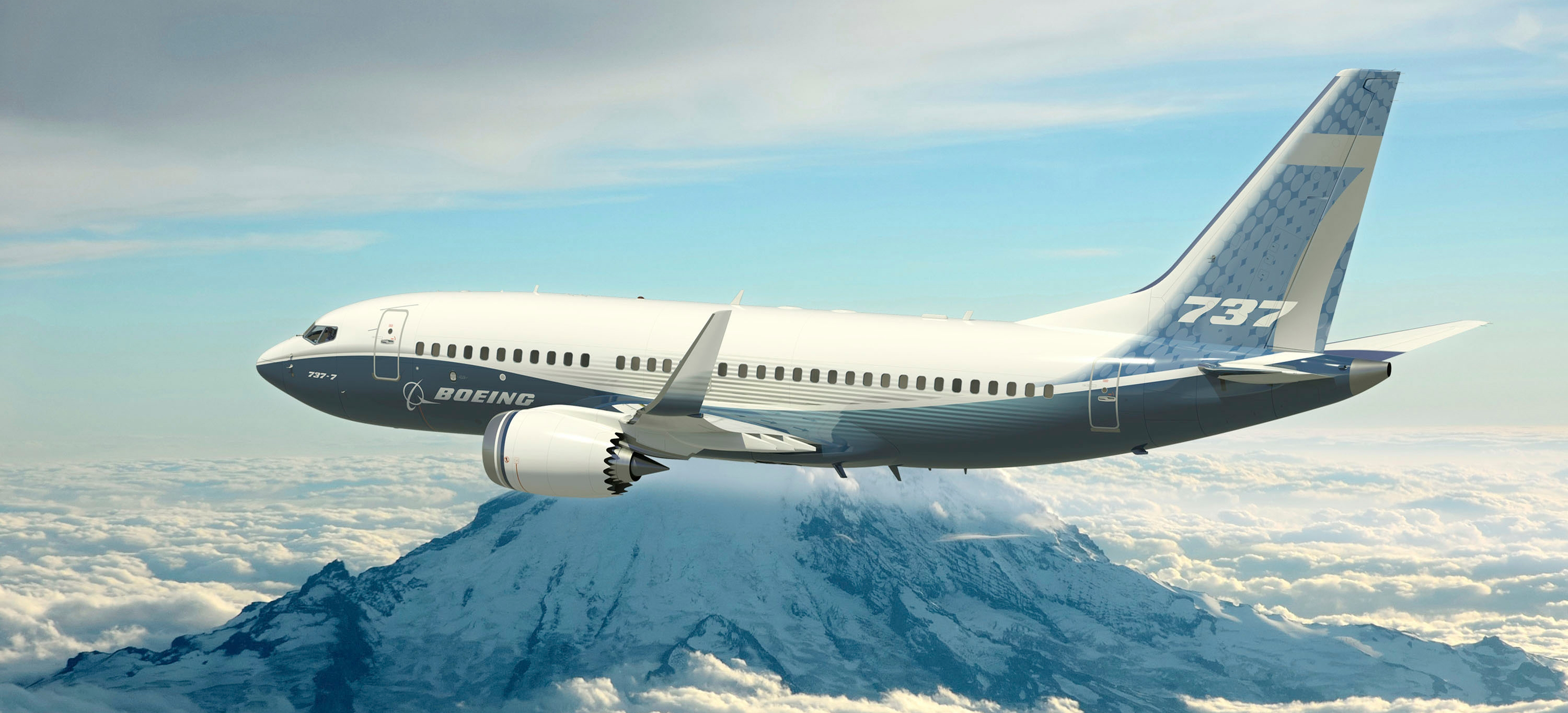
I like the new real livery of the 737 MAX, but not so sure about the name. Image from Boeing.
Will an airline not choose this aircraft because of the name? Of course not. They are going to care more about the performance and the bottom line.  Going with a re-engine 737 versus a whole new product makes sense. Airlines have already showed a strong demand for an updated single-aisle aircraft sooner rather than later. Going with a re-engined 737 will allow Boeing to  improve the 777 and develop additional models for the 787.
There are already496 orders for the new MAX aircraft from five airlines. Those that already have 737NG’s on order will most likely have the opportunity to change over to MAX aircraft.
Boeing states the 737 MAX will have a 16% less fuel consumption than their “competitor’s current offering” (we will assume that is the Airbus A320) and it will have 4% less than the A320neo. The new plane will use CFM International LEAP-1B engines and is expected to have its first delivery sometime in 2017.
So what are your thoughts? Do you like the 737 MAX name?

Wednesday, August 24, 2011

Thursday, August 11, 2011

Pentagon's hypersonic flight test cut short by anomaly


Pentagon's hypersonic flight test cut short by anomaly
BY STEPHEN CLARK
SPACEFLIGHT NOW

Posted: August 11, 2011


Bookmark and Share

A hypersonic glider launched Thursday by the U.S. military was lost in flight, the second straight mishap crippling the Pentagon's desire to develop a strategic weapon to deliver conventional munitions anywhere in the world in less than an hour.

Artist's concept of the Hypersonic Test Vehicle 2 during separation of the Minotaur rocket's payload fairing. Credit: DARPA

After a successful launch aboard a Minotaur 4 rocket, the arrowhead-shaped Hypersonic Test Vehicle 2 separated and transitioned to aerodynamic flight at a speed of Mach 20, according to the Defense Advanced Research Projects Agency, or DARPA.
The military said they collected more than nine minutes of data before an anomaly caused a loss of signal from the hypersonic glider. Ships, aircraft and other tracking assets were in place to receive communications from the high-speed vehicle.
Liftoff occurred at 7:45 a.m. Pacific time (10:45 a.m. EDT; 1445 GMT) from Vandenberg Air Force Base, Calif. It used a three-stage version of the Minotaur 4 rocket, which is powered by retired Peacekeeper missile motors.
The flight should have lasted more than a half-hour before impacting the Pacific Ocean near the U.S. Army's Reagan Test Site at Kwajalein Atoll in the Marshall Islands. Initial indications are the aircraft struck the Pacific Ocean along the planned flight path, according to DARPA.
A nearly identical test vehicle launched in April 2010 also ended prematurely after the craft lost control. Engineers adjusted the second HTV's center of gravity, modifed its angle of attack, and designed it to use thruster jets to help the vehicle control itself.
"We know how to boost the aircraft to near space. We know how to insert the aircraft into atmospheric hypersonic flight," said Air Force Maj. Chris Schulz, DARPA's HTV 2 program manager. "We do not yet know how to achieve the desired control during the aerodynamic phase of flight. It's vexing; I'm confident there is a solution. We have to find it."
After being released from the Minotaur's third stage, the glider was supposed to orient itself for entry back into Earth's atmosphere, then pull up to begin a long-distance glide toward an impact site in the Pacific Ocean.
Thursday's mission, named HTV 2b, was supposed to try out gliding, aerodynamic maneuvers and control algorithms in the hypersonic flight regime at the edge of space.

Artist's concept of the Hypersonic Test Vehicle 2 in aerodynamic flight. Credit: DARPA

Schulz said three major technical challenges exist within the HTV 2 flight envelope, including aerodynamic, aerothermal and guidance, navigation and control. After reaching its peak velocity, temperatures outside the craft's insulated skin were expected to reach 3,500 degrees Fahrenheit.
"Prior to flight, the technical team completed the most sophisticated simulations and extensive wind tunnel tests possible," said Regina Dugan, director of DARPA. "But these ground tests have not yielded the necessary knowledge. Filling the gaps in our understanding of hypersonic flight in this demanding regime requires that we be willing to fly."
In a written statement, Dugan said DARPA will resolve the issues with hypersonic flight and try again.
"To address these obstacles, DARPA has assembled a team of experts that will analyze the flight data collected during today's test flight, expanding our technical understanding of this incredibly harsh flight regime," Schulz said. "As today's flight indicates, high-Mach flight in the atmosphere is virtually uncharted territory."
DARPA said the data reviewed from Thursday's flight will inform policy, acquisition and operational decisions for the future of the Pentagon's Conventional Prompt Global Strike programs. The HTV test program was part of DARPA's Falcon project.
The Defense Department is attempting to develop a conventional global strike weapon to augment the military's nuclear deterrent. It would be able to hit a target anywhere in the world in less than an hour after launching from the United States or a U.S. military base.
The Air Force was planning to launch a Conventional Strike Missile on another Minotaur 4 rocket in 2013. Packed with munitions, the missile would have separated from the booster like the HTV and glided to a precise target more than 4,000 miles downrange in the Pacific Ocean.

KLM McDonnell Douglas MD-11 PH-KCD


Outcome of military's hypersonic test flight unclear

Outcome of military's hypersonic test flight unclear
BY STEPHEN CLARK
SPACEFLIGHT NOW

Posted: August 11, 2011


Bookmark and Share

A three-stage Minotaur 4 Lite rocket blasted off Thursday from the California coast, accelerating a U.S. military hypersonic glider to blazing speeds on a test flight demonstrating technologies for an unmanned global strike bomber, but officials lost contact with the vehicle and could not confirm the mission's outcome.

Artist's concept of the Hypersonic Test Vehicle 2. Credit: DARPA

The solid-fueled Minotaur 4 Lite rocket launched at 7:45 a.m. Pacific time (10:45 a.m. EDT; 1445 GMT) and rolled on a trajectory west from Vandenberg Air Force Base. It was expected to reach a speed of 13,000 mph in about three minutes.
Launch was delayed from Wednesday by poor weather over the Pacific Ocean.
The three-stage version of the launcher uses retired Peacekeeper missile motors. A fourth stage can be added for orbital launches with satellite payloads.
The Pentagon's second Hypersonic Test Vehicle, a throwaway high-speed aerodynamic testbed, was programmed to separate from the Minotaur rocket a few minutes after liftoff. The vehicle was designed to orient itself to fall back into the atmosphere and execute maneuvers to control its altitude and velocity before falling in the Pacific Ocean near the U.S. Army's Reagan Test Site at Kwajalein Atoll in the Marshall Islands, according to the military.
The HTV project is managed by the Defense Advanced Research Projects Agency, or DARPA, the Defense Department's research and development unit.
Posting updates on DARPA's Twitter account, the agency said they lost the communications signal from the HTV a few minutes after launch.
"Downrange assets did not reacquire tracking or telemetry," one Twitter update said. The vehicle "has an autonomous flight termination capability. More to follow."
A DARPA spokesperson did not respond to questions Thursday afternoon.
The second HTV flight, called HTV 2b, aimed to complete unfinished testing from an initial demonstration in April 2010. During that flight, the arrowhead-shaped aircraft lost control and had to be destroyed by an on-board termination system.
Engineers blamed the mishap on flight control authority limitations as the HTV soared through the edge of space at more than 10,000 mph. Its control flaps were unable to maintain the vehicle's attitude, causing the craft to yaw and roll before it autonomously commanded the termination of the flight, according to DARPA.
Officials adjusted the second HTV's center of gravity, decreased its programmed angle of attack and used the craft's reaction control system thrusters to help out the flaps keep the vehicle under control, DARPA said in a press release.
Despite the abridged flight, last year's test gathered 139 seconds of useful aerodynamic data and verified navigation, communications and control systems.
The taste of data from the shortened first HTV flight was still more than could have been efficiently collected inside wind tunnels on the ground, according to Air Force Maj. Chris Schulz, the HTV 2 program manager.
Wind tunnels are able to simulate long-term hypersonic flight conditions up to velocities around Mach 15. Beyond that, engineers need special wind tunnels called impulse tunnels to capture data milliseconds at a time. It would have required years, tens of millions of dollars and several hundred impulse tunnel tests to replicate data from the April 2010 demo flight.
"And even then, we wouldn't know exactly what to expect based solely on the snapshots provided in ground testing," Schulz said. "Only flight testing reveals the harsh and uncertain reality."
It's unclear how much data was collected on Thursday's mission.
About three minutes after launch, the Minotaur rocket should have accelerated the HTV payload to about 20 times the speed of sound, fast enough to travel from New York to Los Angeles in 12 minutes. Once the glider was released, it was supposed to first prepare to re-enter Earth's atmosphere, then soar through the edge of space with a series of programmed banks to control the craft's speed and trajectory.
Temperatures outside the vehicle were expected to reach 3,500 degrees Fahrenheit during the most extreme part of the flight, hot enough to melt steel. Tracking ships, planes and space assets were positioned to collect data during the flight, and the HTV was covered in sensors to study how the vehicle responds throughout the mission.
At the end of the mission, the HTV was to make a destructive dive into the ocean.
DARPA says the HTV craft featured a high lift-to-drag aerodynamic shape, lightweight thermal protection structures and autonomous guidance, control and flight safety systems. The vehicles were manufactured by Lockheed Martin Corp.
This pair of HTV tests was part of DARPA's Falcon project. An Air Force-led follow-on flight called the Conventional Strike Missile is planned launch on another Minotaur rocket in mid-2013, in which another HTV will be outfitted with a conventional warhead to be directed toward a target downrange.
Thursday's launch was the fourth flight of a Minotaur 4 rocket. Two of the missions hauled satellites into low Earth orbit, in addition to the dual HTV launches.
Another Minotaur 4 launch is scheduled for Sept. 27 from the Kodiak Launch Complex in Alaska. It will orbit the military's TacSat 4 satellite with an experimental UHF communications package.

Wednesday, August 10, 2011

Weather forces delay in launch of global strike demo

Weather forces delay in launch of global strike demo
BY STEPHEN CLARK
SPACEFLIGHT NOW

Posted: August 10, 2011


Bookmark and Share

Poor weather over the Pacific Ocean forced military officials to put off the planned Wednesday launch of a hypersonic glider from Vandenberg Air Force Base in California.

Photo of the Minotaur 4 Lite rocket before launch. Credit: U.S. Air Force

The mission was scrubbed because of inclement weather conditions downrange west of Vandenberg, the nation's primary West Coast launch site located between San Francisco and Los Angeles.
Bad weather was reported near Kwajalein Atoll, the remote destination for the mission's high-speed flight demonstrator. After conducting maneuvers over the Pacific Ocean, the arrowhead-shaped vehicle is supposed to fall back to Earth near the U.S. Army's Reagan Test Site near Kwajalein in the Marshall Islands.
Liftoff is rescheduled for 7 a.m. Pacific time (10 a.m. EDT; 1400 GMT) Thursday aboard a three-stage Minotaur 4 Lite launch vehicle, according to the U.S. Air Force. The launch could occur from 7 a.m. through 1 p.m. local time.
The mission's goal is to demonstrate hypersonic gliding and maneuvering techniques at the edge of space at speeds eclipsing 13,000 mph. The test flight could help the Pentagon develop a prompt global strike program to deliver conventional warheads to faraway targets in less than an hour.
It is the second flight of the military's Hypersonic Test Vehicle 2, a craft built by Lockheed Martin Corp. for the Defense Advanced Research Projects Agency, or DARPA.
An initial demo flight in April 2010 ended prematurely when the HTV lost control and had to be destroyed. Engineers concluded the anomaly was due to flight control authority limitations when the vehicle's flaps were unable to maintain the HTV's orientation.
Despite the abridged flight, last year's test gathered 139 seconds of useful aerodynamic data and verified navigation, communications and control systems.
The taste of data from the shortened first HTV flight was still more than could have been efficiently collected inside wind tunnels on the ground, according to Air Force Maj. Chris Schulz, the HTV 2 program manager.
Wind tunnels are able to simulate long-term hypersonic flight conditions up to velocities around Mach 15. Beyond that, engineers need special wind tunnels called impulse tunnels to capture data milliseconds at a time. It would have required years, tens of millions of dollars and several hundred impulse tunnel tests to replicate data from the April 2010 demo flight.

Artist's concept of the Hypersonic Test Vehicle 2. Credit: DARPA

"And even then, we wouldn't know exactly what to expect based solely on the snapshots provided in ground testing," Schulz said. "Only flight testing reveals the harsh and uncertain reality."
The second craft has a different center of gravity, it will fly with a reduced angle of attack, and it will use thruster jets to help control itself in flight, according to DARPA, the military's research and development unit.
"DARPA looks forward to conquering more unknowns about long-duration hypersonic missions," said Dave Neyland, director of DARPA's tactical technology office. "We need to increase our technical knowledge to support future hypersonic technology development. We gained valuable data from the first flight, made some adjustments based on the findings of an engineering review board to improve this second flight, and now we're ready to put all of that to the test."
About three minutes after launch, the Minotaur rocket should accelerate the HTV payload to about 20 times the speed of sound, fast enough to travel from New York to Los Angeles in 12 minutes. Once the glider is released, it will first prepare to re-enter Earth's atmosphere, then soar through the edge of space with a series of programmed banks to control the craft's speed and trajectory.
Temperatures outside the vehicle will reach 3,500 degrees Fahrenheit during the most extreme part of the flight, hot enough to melt steel. Tracking ships, planes and space assets will collect data during the flight, and the HTV is covered in sensors to study how the vehicle responds throughout the mission.
At the end of the mission, the HTV will dive into the ocean and will not be recovered.
DARPA says the HTV craft features a high lift-to-drag aerodynamic shape, lightweight thermal protection structures and autonomous guidance, control and flight safety systems.
This pair of HTV tests is part of DARPA's Falcon project. An Air Force-led follow-on flight called the Conventional Strike Missile is planned launch on another Minotaur rocket in mid-2013, in which another HTV will be outfitted with a conventional warhead to be directed toward a target downrange.

Fox News-Technology - More Headlines
Inside the Air Force's 13,000-MPH Hypersonic Plane
Wed Aug 10, 2011 09:43 AM EDT